A Simple Winter Ritual, A Moment of Reflection

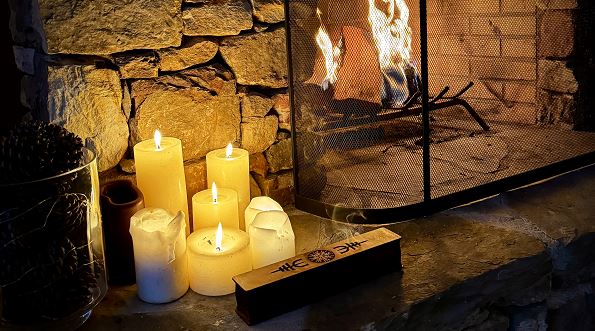
In the deep heart of winter, when the days are short and the world feels wrapped in a quiet hush, a small ritual can become an anchor. One of the simplest and most powerful is the act of lighting a candle and reflecting on nature. Whether you walk a Druid path, another spiritual tradition, or none at all, this gentle practice offers a moment of stillness in a season that can feel heavy and inward-turning.

The flame of a simple candle is a reminder of continuity. In January the sunlight is scarce and the earth lies dormant. Lighting a candle becomes an affirmation that warmth and life still exist beneath the surface. Many people find that this small gesture helps them reconnect with their own inner spark, the part that remains steady even when the world around them feels cold or chaotic.

Pairing the candle with a nature reflection deepens the effect and doesn’t require an elaborate meditation. Sit for a few minutes, perhaps with a cup of warming tea, and consider something from the natural world: the patience of bare trees outside the window, the resilience of winter birds at the feeder, or the quiet strength of mountains. You might reflect on your own relationship to these qualities, what nature is teaching you right now, and where you feel called to grow when the light returns.

Extending this as a weekly practice throughout the year could be a powerful way to create a meditative rhythm in your life. Amid busy schedules, a recurring moment of return can steady the mind and soften the spirit. Over time, this small ritual becomes a marker in the week: a pause, a breath, a reminder that you belong to something larger and older than any single season.

In the cold months, tending a small flame and a small reflection can be a way of tending yourself quietly and with a sense of belonging to the living world.

/|\ SeanR, Druid

Welcoming the Winter Solstice

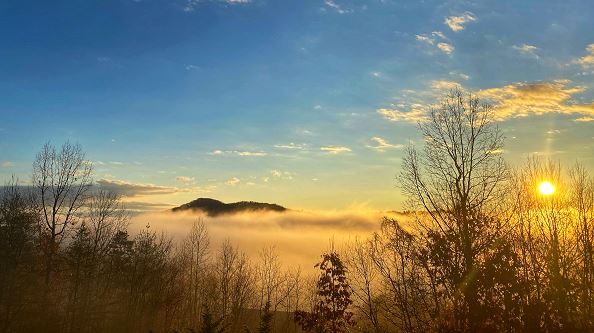
A winter sunrise in the Blue Ridge Mountains of North Carolina.
A winter sunrise in the Blue Ridge Mountains of North Carolina. ©SeanR 2025

At the Winter Solstice—Alban Arthan, the “Light of Arthur”—the year reaches its deepest stillness. This is the longest night, the moment when the sun appears to stand still on the horizon before beginning its slow climb back toward fullness. For modern Druids, this turning is not only astronomical but profoundly symbolic. It speaks of renewal, endurance, and the quiet strength found in rest. It is a time when in the dark earth seeds are held safe and new beginnings take shape.

Druid celebrations, including our own here at Awen’s Light Grove, center on acknowledging both darkness and returning light. Some will gather before dawn to witness sunrise, and light a fire or candle to greet the newborn sun. Rituals may include storytelling, blessings of the hearth, reflection on the past year, and setting intentions for the one to come. While there can be grand ceremonies at this time of year, for many Druids it is more of a reflective time about presence, gratitude, and inner listening.

Humanity has been honoring this threshold for thousands of years. At Newgrange in Ireland, the rising solstice sun pierces the passage and illuminates the inner chamber with a golden beam—a feat of engineering and devotion older than Stonehenge and the pyramids. Stonehenge itself aligns with the solstice sunrise, while Maeshowe in Orkney frames the sunset. These sites remind us that the returning light has always mattered, anchoring communities to seasonal rhythms long before written history.

You don’t need to be a Druid to celebrate meaningfully. Wake early and watch the dawn. Light a single candle and reflect on what you’re ready to release and what you hope to nurture. Take a winter walk, noticing how the land rests and restores itself. Prepare a warm meal, share stories, or create a small moment of beauty in your home. However you observe the Winter Solstice the Druids of Awen’s Light Grove invite you to pause, breathe, and remember that even in the darkest night, the promise of light is already on the horizon.


/|\ SeanR, Druid

A poem for Imbolc

Imbolc is a time when nature is deep into Winter with
the first stirrings of Spring appearing. This poem, Dreaming,
is a tree-grok poem of this time of the year from the point
of view of the trees around us.

Shooting Star


Dreaming – Winter – Imbolc

winter is long – our dreams refresh us

slumber we do and softly we snore

some can hear us – special they are

sap slows and thickens for the season to come


with imbolc we rest

and dream of our feathered friends

we feel the warm sun on our bark

we dream the warm rains of spring


thick snows clothe us

forest totems we have become

winter winds whip through our branches

the sound whistling in our dreams


our dreams refresh us

and restore us for the season to come

we dream of future bounty

ready we are for spring

A Druid’s Path

Deciding to explore the Druid Path has been life enhancing while also challenging. As with any adventure or travel, I was excited and curious about what I would encounter.  I was wandering into territory which held familiarity as well as mysteries.  There would be open meadows and dark forests, mountains and valleys, there would be challenges which were intellectual, physical and emotional.  And it would be a much longer journey than I had imagined.  In fact, the mysterious and magical journey continues even after completing the Druid level program.

The Order of Bards, Ovates and Druids independent study program is not bound by a strict calendar.  Once enrolled in the course, the student proceeds at their own pace.  A very disciplined new Bard could finish the course in a year.  Most of us take much longer.  Exploring the mysteries of one’s self, one’s relationship to the elements, to seasons, to myths that inform us of history and ethics are relevant for modern Druids.  The Bard level sets the Druid student on their path. 

Out of deep respect for the journey and one another OBOD Druids do not discuss the specifics of the course.  There is support for each individual to have their own discoveries without knowing the “territory ahead”.  Acknowledging we are each engaged in a “mystery school” and that our discoveries and insights are our own is held in sacred trust.  OBOD provides qualified mentors to serve as guides, as needed, for each enrollee.  Since there are always questions that arise, creating a contact to whom you can direct questions is valuable.  These communications are usually via email unless the mentor and/or student prefer another method.

Awen’s Light Grove follows the Order of Bards, Ovates and Druids ceremonies for the eight festivals that mark the wheel of the year.  Using the OBOD ceremony reminds us we are part of something much bigger than our local grove.  All over the globe there are fellow Druids following the same ritual, holding the same intentions for the good of the planet and all inhabitants.  Each individual and grove are weaving an interlacing magic.

If you love nature and it’s mysteries, if you want to know yourself more deeply, if you want to engage in supporting the web of connections with other beings (human and otherwise) you may find an enriching experience in enrolling in OBOD.  Awen’s Light Grove members look forward to sharing the journey with you.

300 Years of Druidry

NOVEMBER 28, 2017 BY JOHN BECKETT

November 28 marks an uncertain but important anniversary: 300 years of modern Druidry.

On November 28, 1717, the Ancient Druid Order was founded at the Apple Tree Tavern in London. Or at least that’s what Ross Nichols – the founder of the Order of Bards, Ovates and Druids – said in The Book of Druidry.1 Historian Ronald Hutton says there’s no evidence this meeting took place and puts the first documented Druid order as beginning in 1792.2

So do we have anything to celebrate or not? Like Christians arguing over whether Jesus was really born on December 25 (it’s uncertain but unlikely), finding the exact date is less important than picking a date and celebrating.

The re-imagining and re-creation of Druidry is very much worth celebrating.

awen flag 2015

The Ancient Druids

There is very little we can say with certainty about the ancient Druids. Based on the evidence we have, we think they were judges, healers, and keepers of records and lore. They were probably priests, though how closely they resembled the temple priests of the Greco-Roman world is difficult to say. Whatever they were, they were important enough for the Romans to go to the trouble of wiping them out in the Anglesey massacre of 61 CE. The Roman historian Tacitus reported:

On the shore stood the opposing army with its dense array of armed warriors, while between the ranks dashed women, in black attire like the Furies, with hair disheveled, waving brands. All around, the Druids, lifting up their hands to heaven, and pouring forth dreadful imprecations, scared our soldiers by the unfamiliar sight, so that, as if their limbs were paralysed, they stood motionless, and exposed to wounds. Then urged by their general’s appeals and mutual encouragements not to quail before a troop of frenzied women, they bore the standards onwards, smote down all resistance, and wrapped the foe in the flames of his own brands.3

What the Roman armies could not destroy, the coming of Christianity did. Druids lost their positions as priests, then as advisors, then as healers. By the 7th century, their only role was as bards who may not have known anything about their predecessors.

The idea of underground survivals is attractive and therefore persistent. In The Book of Druidry (1975) Ross Nichols wrote:

Intermittent recognition of Druidry as a possible philosophic system or a local cult seems to have occurred from time to time since AD 1245 and obviously the tradition went on in hereditary groups who kept it to themselves.

Yet there is no evidence for these “obvious” hereditary groups, and it seems highly likely at least one would have come out of the shadows by now. As with the claims of witchcraft survivals from ancient Paganism, the claims …

Read on John Beckett’s blog