
Season After Season

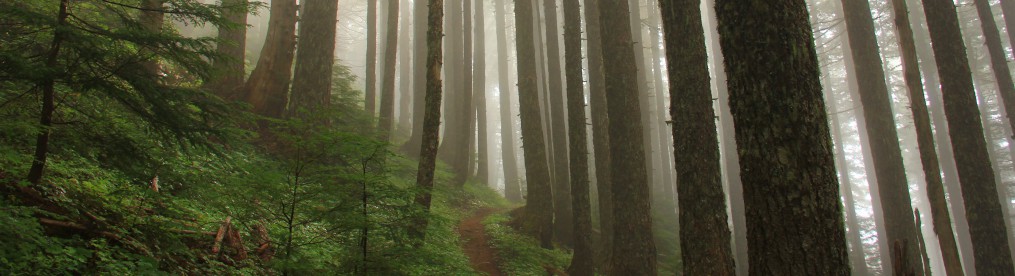
Last month, in The Deer Path, we reflected on meandering paths that appear in the landscape through repeated use. While no deer plans a track and no surveyor marks it on a map, a trail emerges because generations of animals return to the same route, season after season. That repetition creates a visible path through the forest.

Over the past few weeks, I have found myself thinking about a similar process in our spiritual practice, the less visible paths formed within us, rather than the paths we see under our feet.

There is a diversity of beliefs to be found among the practitioners of Druidry. Some Druids relate to the gods as distinct beings, while others approach them as symbols, cultural figures, or even expressions of nature’s forces. There are those who hold strong metaphysical convictions while others remain uncertain. Yet despite these differences, Druids continue to gather around the same festivals, observe the same seasons, and participate in many of the same practices.

How does that work? The answer may lie less in shared belief than in shared practice. 

Druidry often places a greater emphasis on what we do than on what we are required to believe. We mark the turning of the year; we observe the land around us; we return to ritual, meditation, study, or contemplation. Through repetition, these practices begin to shape our attention and perception, creating habits of awareness.

Just as repeated passage creates a deer path through a woodland, repeated practice creates pathways within our memory and understanding. Meaning often emerges gradually through our practice rather than arriving fully formed beforehand. The result is a diversity of beliefs in Druidry created from a shared orthopraxy. 

The Summer Solstice is approaching and we will gather again to mark a familiar point on the Wheel of the Year. It’s possible our beliefs may differ and the words we speak may vary but the act of returning remains the same. The return is itself part of the path. Perhaps over time and for some at least, it is the path.
The Deer Path

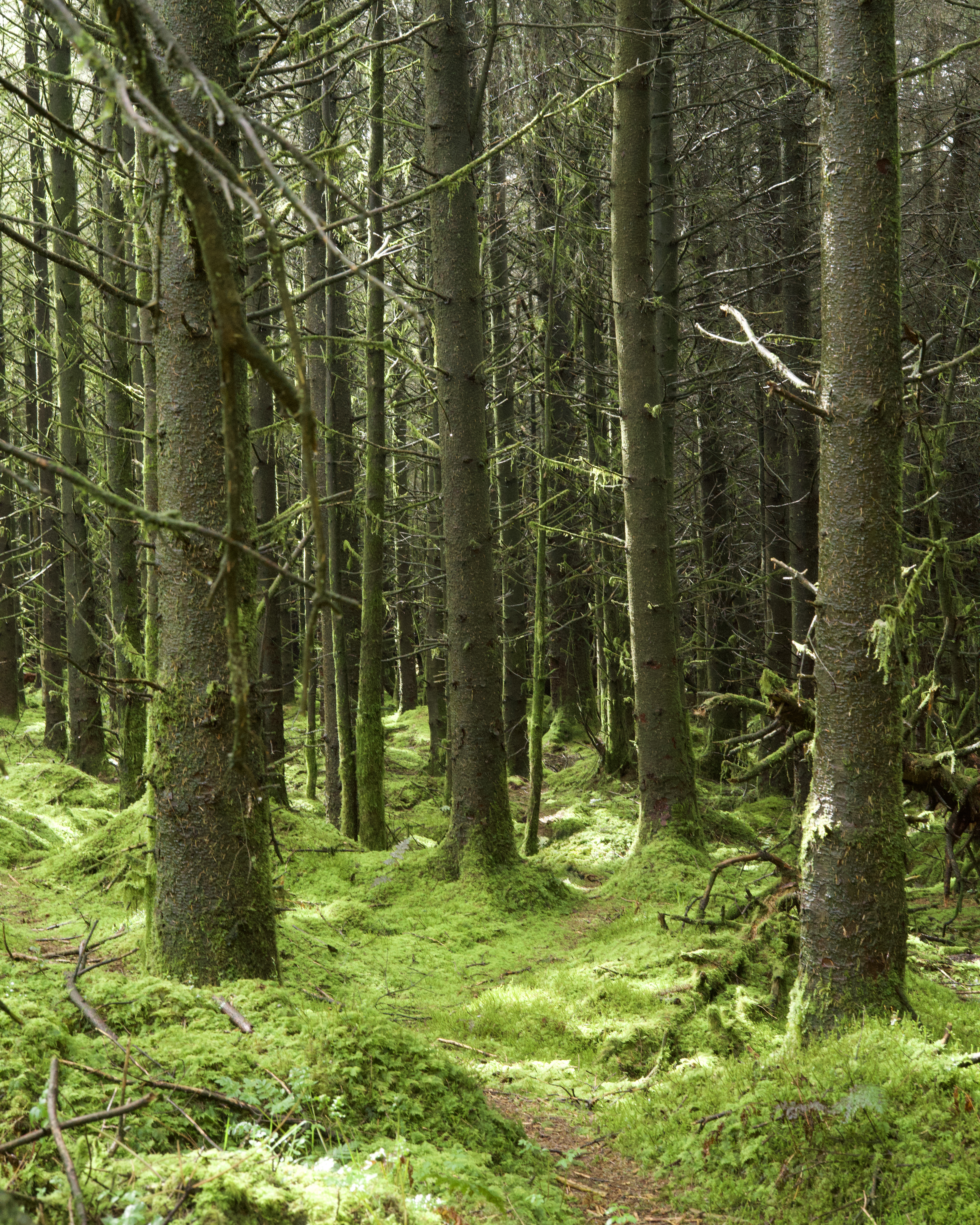
Early one morning, on a recent visit to Ireland, I took a walk in the forested hills. It was an hour or so after dawn but the ground still felt like it was holding the night. Off to the side of the trail I noticed a narrow opening. Not a path in any formal sense. No edges, no clearing, nothing marked. Easy to walk past without noticing. It took a second look to see that it continued, meandering between the trees.

I stood there for a while trying to read it. It didn’t run straight. It slipped around trunks, dipped slightly, disappeared, then reappeared a few yards on. There was no vantage point from which its direction became clear. Whatever used it wasn’t interested in showing where it was going. Only in getting there.

It raised a simple question: how does something like this come into being?

It was certainly not through design or a single pass. A path like that forms because something returns, in this case Sika deer. Again and again, the same line is taken. Small pressure, repeated over time, leaves a trace. The ground yields just enough. Moss parts slightly. Eventually it is there, though only barely.

At this time of Beltane, seeing the deer path brought to mind the structure of our Druidic rituals. What is visited repeatedly becomes structure. The path was not planned that way, but repetition settled it in the ground. A working practice follows the same logic. It does not rely on explanation or performance. It returns to the same place, the same sequence, the same attention, often enough that the movement becomes familiar.

Over time, that familiarity reduces friction with less needing to be decided or said. The line is already there. Like the track in the moss, it remains easy to miss from a distance, but unmistakable underfoot. It exists because it has been used, and used again, until the ground remembers it.

SeanR /|\

Spring Equinox in North Carolina: A Shift in Light

Around March 20th each year, the spring equinox marks a precise point in the Earth’s orbit: day and night come into near alignment, and the sun sits directly over the equator. From here, daylight begins to extend more decisively across the Northern Hemisphere. In North Carolina, that shift is already visible to us. Mornings arrive earlier, afternoons hold their brightness longer, and the sun carries more warmth even when the air has not fully caught up.

On the ground, the season is moving, but not in a straight line. We are experiencing temperatures swing from warm to cold and back again, sometimes within a few days. Redbuds have already passed through their brief bloom, while other trees are only beginning to wake. Birdsong has picked up noticeably, especially in the early morning hours. Frogs are active in wetter areas at dusk. Rain is still needed, and when it comes it feels necessary rather than inconvenient. Then a stretch of warm sun returns and resets everything again. It’s an uneven pattern, but the direction is clear.

Within the Druid tradition, the spring equinox is often associated with equilibrium. It is light and dark held in near parity. In OBOD, that idea is best approached through direct observation rather than abstraction. The equinox is a transition point. Conditions are shifting, but they have not stabilized. The last frost date has not yet passed, even as garden centers and hardware stores begin to fill with early plants. There is a tension between what is emerging and what is still possible and recognizing that tension is part of understanding the season.

Observance does not need to be elaborate. Step outside at sunrise and register the quality of the light. Walk a familiar route and note what has changed over the past few weeks. In the garden, clear a space, ready the soil, make a plan. However, hold back where needed. There is still risk in planting too early but we can prepare for what comes next. The equinox marks a point on the calendar, while the season itself is still unfolding. Paying attention now sets the tone for everything that follows. At Awen’s Light Grove, we celebrate the equinox with ritual, and if you would like to be part of that, use the contact form on this page to get in touch. We would love to hear from you.

/|\ SeanR

Imbolc, Winter Begins to Loosen its Grip

Early February is a crowded time in the ritual calendars of many cultures. Long before modern calendars standardized the year, people marked this period as a turning point, when winter began to loosen its grip on the land and small signs of returning life could be noticed again. It was a moment when attention shifted from endurance to observation, from simply getting through winter to watching carefully for what might follow it.

In Celtic Europe, Imbolc was originally a seasonal marker tied to livestock cycles and the gradual return of light, and only later became closely associated with Brigid, who is linked with healing, poetry, smithcraft, and fire. Brigid was understood as a protective presence who moved through the land blessing people and animals. Offerings such as bread or cake were traditionally left out for her. With the spread of Christianity, Brigid became Saint Brigid of Kildare, absorbing many of the same qualities: care for the vulnerable, hospitality, healing, and the keeping of sacred flame.

Awen’s Light Grove is affiliated with the Order of Bards, Ovates and Druids. We celebrate Imbolc on or around February 1st with a grove ritual, usually followed by a small Eisteddfod. For Druids, Imbolc is the first of the spring festivals and a time for re-orientation. By paying attention to subtle changes in light, temperature, and inner motivation, we align ourselves with the rhythm of the land. In this sense, Imbolc is about readiness. It reminds us that renewal begins with awareness, and that what survives the winter often does so because it was tended patiently long before it was visible. Contact us if you would like to join this celebration.

If you are not yet ready to join us but would like to mark Imbolc at home in a non-religious way, try this: If weather allows, take a short walk and notice what has changed since midwinter and what has not. In North Carolina this may be subtle: buds forming, birdsong returning unevenly, or shifts in how the light falls across familiar ground. Later at home, take a few minutes to write down one small thing you want to tend in the coming months: a habit, a skill, a way of paying attention, or a relationship to a place. Keep it modest and realistic, suited to a season that is only just beginning to turn.

You can find out more about Awen’s Light Grove here and the Order of Bards, Ovates and Druids here.

/|\

SeanR

A Simple Winter Ritual, A Moment of Reflection

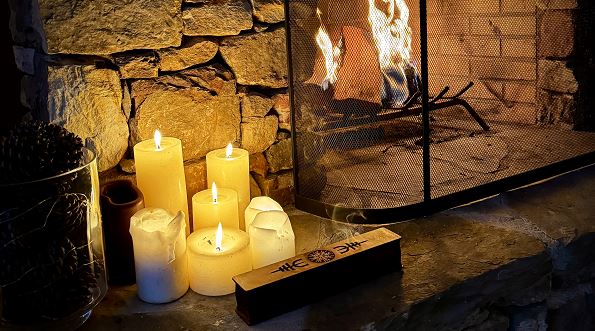
In the deep heart of winter, when the days are short and the world feels wrapped in a quiet hush, a small ritual can become an anchor. One of the simplest and most powerful is the act of lighting a candle and reflecting on nature. Whether you walk a Druid path, another spiritual tradition, or none at all, this gentle practice offers a moment of stillness in a season that can feel heavy and inward-turning.

The flame of a simple candle is a reminder of continuity. In January the sunlight is scarce and the earth lies dormant. Lighting a candle becomes an affirmation that warmth and life still exist beneath the surface. Many people find that this small gesture helps them reconnect with their own inner spark, the part that remains steady even when the world around them feels cold or chaotic.

Pairing the candle with a nature reflection deepens the effect and doesn’t require an elaborate meditation. Sit for a few minutes, perhaps with a cup of warming tea, and consider something from the natural world: the patience of bare trees outside the window, the resilience of winter birds at the feeder, or the quiet strength of mountains. You might reflect on your own relationship to these qualities, what nature is teaching you right now, and where you feel called to grow when the light returns.

Extending this as a weekly practice throughout the year could be a powerful way to create a meditative rhythm in your life. Amid busy schedules, a recurring moment of return can steady the mind and soften the spirit. Over time, this small ritual becomes a marker in the week: a pause, a breath, a reminder that you belong to something larger and older than any single season.

In the cold months, tending a small flame and a small reflection can be a way of tending yourself quietly and with a sense of belonging to the living world.

/|\ SeanR, Druid