Welcoming the Winter Solstice

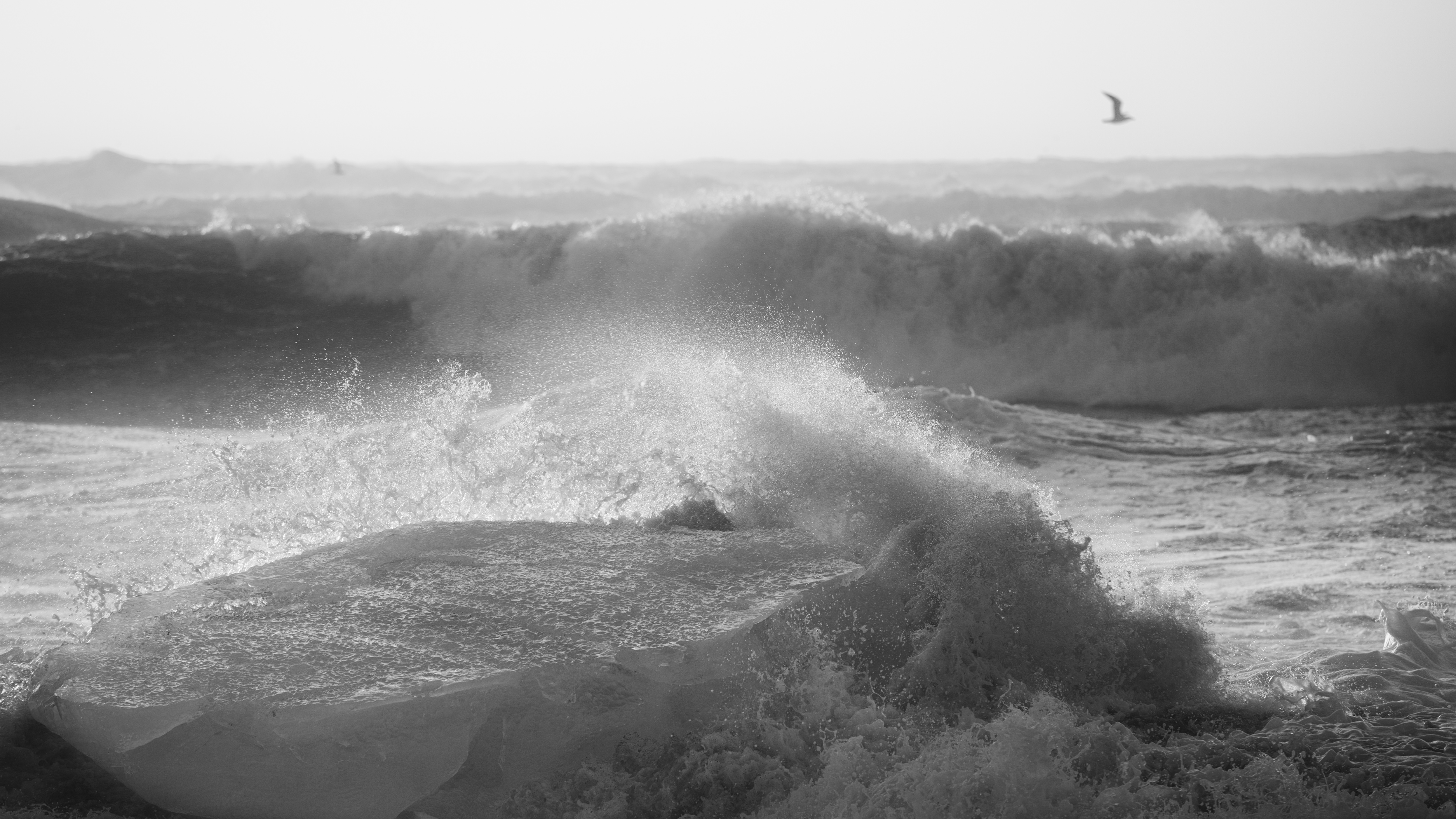
A winter sunrise in the Blue Ridge Mountains of North Carolina.
A winter sunrise in the Blue Ridge Mountains of North Carolina. ©SeanR 2025

At the Winter Solstice—Alban Arthan, the “Light of Arthur”—the year reaches its deepest stillness. This is the longest night, the moment when the sun appears to stand still on the horizon before beginning its slow climb back toward fullness. For modern Druids, this turning is not only astronomical but profoundly symbolic. It speaks of renewal, endurance, and the quiet strength found in rest. It is a time when in the dark earth seeds are held safe and new beginnings take shape.

Druid celebrations, including our own here at Awen’s Light Grove, center on acknowledging both darkness and returning light. Some will gather before dawn to witness sunrise, and light a fire or candle to greet the newborn sun. Rituals may include storytelling, blessings of the hearth, reflection on the past year, and setting intentions for the one to come. While there can be grand ceremonies at this time of year, for many Druids it is more of a reflective time about presence, gratitude, and inner listening.

Humanity has been honoring this threshold for thousands of years. At Newgrange in Ireland, the rising solstice sun pierces the passage and illuminates the inner chamber with a golden beam—a feat of engineering and devotion older than Stonehenge and the pyramids. Stonehenge itself aligns with the solstice sunrise, while Maeshowe in Orkney frames the sunset. These sites remind us that the returning light has always mattered, anchoring communities to seasonal rhythms long before written history.

You don’t need to be a Druid to celebrate meaningfully. Wake early and watch the dawn. Light a single candle and reflect on what you’re ready to release and what you hope to nurture. Take a winter walk, noticing how the land rests and restores itself. Prepare a warm meal, share stories, or create a small moment of beauty in your home. However you observe the Winter Solstice the Druids of Awen’s Light Grove invite you to pause, breathe, and remember that even in the darkest night, the promise of light is already on the horizon.


/|\ SeanR, Druid

300 Years of Druidry

NOVEMBER 28, 2017 BY JOHN BECKETT

November 28 marks an uncertain but important anniversary: 300 years of modern Druidry.

On November 28, 1717, the Ancient Druid Order was founded at the Apple Tree Tavern in London. Or at least that’s what Ross Nichols – the founder of the Order of Bards, Ovates and Druids – said in The Book of Druidry.1 Historian Ronald Hutton says there’s no evidence this meeting took place and puts the first documented Druid order as beginning in 1792.2

So do we have anything to celebrate or not? Like Christians arguing over whether Jesus was really born on December 25 (it’s uncertain but unlikely), finding the exact date is less important than picking a date and celebrating.

The re-imagining and re-creation of Druidry is very much worth celebrating.

awen flag 2015

The Ancient Druids

There is very little we can say with certainty about the ancient Druids. Based on the evidence we have, we think they were judges, healers, and keepers of records and lore. They were probably priests, though how closely they resembled the temple priests of the Greco-Roman world is difficult to say. Whatever they were, they were important enough for the Romans to go to the trouble of wiping them out in the Anglesey massacre of 61 CE. The Roman historian Tacitus reported:

On the shore stood the opposing army with its dense array of armed warriors, while between the ranks dashed women, in black attire like the Furies, with hair disheveled, waving brands. All around, the Druids, lifting up their hands to heaven, and pouring forth dreadful imprecations, scared our soldiers by the unfamiliar sight, so that, as if their limbs were paralysed, they stood motionless, and exposed to wounds. Then urged by their general’s appeals and mutual encouragements not to quail before a troop of frenzied women, they bore the standards onwards, smote down all resistance, and wrapped the foe in the flames of his own brands.3

What the Roman armies could not destroy, the coming of Christianity did. Druids lost their positions as priests, then as advisors, then as healers. By the 7th century, their only role was as bards who may not have known anything about their predecessors.

The idea of underground survivals is attractive and therefore persistent. In The Book of Druidry (1975) Ross Nichols wrote:

Intermittent recognition of Druidry as a possible philosophic system or a local cult seems to have occurred from time to time since AD 1245 and obviously the tradition went on in hereditary groups who kept it to themselves.

Yet there is no evidence for these “obvious” hereditary groups, and it seems highly likely at least one would have come out of the shadows by now. As with the claims of witchcraft survivals from ancient Paganism, the claims …

Read on John Beckett’s blog

Expanding Circles

Pagan groups are notoriously volatile, in the chemical sense of the word:  they evaporate quickly.  Sometimes they’re volatile in the commonly used sense of the word:  they change rapidly, unpredictably, and for the worse.  Much of this volatility comes from a lack of understanding of what is required to form and maintain a functional and healthy religious group.

Good religious groups may evolve organically without any structural planning (or even structural awareness) but like biological evolution, for every successful species there are many that go extinct.  If you attempt to duplicate the evolutionary process of such a lucky group you’re likely to fail – you won’t have the same people in the same location in the same circumstances at the same time.

Fortunately, there are some commonalities among healthy religious groups that can be duplicated.  I touched on some of this when I wrote about how to start a CUUPS chapter.  Today I’d like to expand on the structure of religious groups.  While some of this comes from formal education in business organizations and leadership, most of it comes from a lifetime of experience in churches, fraternal orders, religious orders and Pagan groups of all descriptions.

Think of the structure of a religious group not as a hierarchy but as a set of concentric circles.  Start at the core and work your way outward.

Core principles and values.  This is the core, the center, the foundation.  This is why the group exists in the first place.  Too often this core is ignored, or assumed to be something other than what it really is.

You want to start a Pagan group?  Great.  Will it be Nature centered, Deity centered, Self centered or Community centered?  You want to start a polytheist group?  Which pantheon?  Which deities?  You want to start a CUUPS group?  How do you see UU Paganism?  General UUism with an emphasis on the Seventh Principle and the Sixth Source?  Generic Wicca?  Devotional polytheism in an inclusive setting?  If members have different core principles and values they simply must negotiate which principles and values the group will be formed around or conflict is inevitable.

The core principles and values are who and what the group exists to serve.  Devotion to that core is what keeps people moving forward when times get tough.  Without it, it’s very easy to abandon a group when the work gets hard.

Mission and vision.  This is what you’re doing to do.  It’s how you’re going to serve your core principles and values.

Ten or fifteen years ago, mission and vision statements were the trendy thing in business:  create a pithy mission statement that sums up who you are and what you do.  A lot of that trendiness carried over into the religious world.  But too many of those professionally-crafted mission statements were printed, posted, and then promptly forgotten.

Before I arrived in 2003 the members of Denton CUUPS created a very nice mission statement.  But if you want to know what our mission is today, go look at our calendar and see what we’re actually doing:  holding public rituals on the eight high days, participating in roadside cleanup, teaching classes and providing other opportunities for learning, and spending time in the natural world.

What are you going to do and how are you going to do it?

Core leaders.  Individual members don’t show up until the third circle.  This is critical:  the core principles and the mission are more important than any one person or subgroup of people.

Large, established, well-funded groups can function via institutional controls and operations.  Small groups rely on individual people to get things done.  One person can do this if she’s very strong, very capable, very grounded, and very committed.  Most times it takes two or three.  In a large group it takes more.

These are the people who keep the calendar and make sure everything gets done and done right.  They don’t do all the work – they can’t, that’s a recipe for fast burnout – but they make sure all the work gets done.  They are extremely committed to the principles and the mission and they do their best to keep everyone focused on why they’re there.  They understand people sometimes fail, but the group can never be allowed to fail.

It’s not enough to be dedicated.  A core leader also has be a good leader:  he has to have good communication skills, attention to detail, and the ability to embody the ideals of the group.  Don’t just tell people what a good member is, show them.

The core leaders aren’t necessarily the most skilled priests and priestesses – facilitating ritual and leading a group are two very different skill sets.  In churches, it’s common to find good pastors who are mediocre preachers or inspiring speakers who are lousy church managers.  Match the group’s needs with the capabilities of its members and don’t expect people to do things they can’t do.

Right or wrong, core leaders’ voices usually carry the most weight.  This is why groups need more than one core leader:  even the most committed and the most knowledgeable leaders aren’t right all the time.

Committed members.  These are the folks you can count on to be at every circle, every dinner, and every service project.  Maybe not at every single event, but if they aren’t there you can bet there’s a very good reason.  You can count on them as financial contributors, within their means.  They’re every bit as committed as the core leaders, but for whatever reason, they’re not leaders.  Maybe they don’t have leadership skills.  Maybe they’ve been burned in other organizations.  Maybe they just don’t like being in front.  They may accept short-term leadership roles, but don’t look for them to drive the train.

Occasionally a committed member will become a core leader, but be very hesitant to push them in that direction.  If they accept only out of obligation, they may be hurt when – through no fault of their own – they aren’t able to get the results they know the group needs.

Casual members.  These are the folks you can count on to be at some events some of the time.  If they commit to something they’ll do it, but they’re not likely to commit to much.  They may have other obligations (work, family, other religious groups) that also have a claim on their time, the core principles and values may not be of great importance to them, they may be new to the group or they may be old members who are stepping back, either out of fatigue or to allow someone else to step forward.

Accept the reality of casual members and be thankful for what they contribute.  If you push them to become committed members before they’re ready, you’ll lose them.

Occasional visitors.  Some of these are the people who show up to three events in a row and then you don’t see them again for six months.  Others are people who show up to six high day rituals every year but who show no indication they want to join.

Some may be potential members who just haven’t joined yet.  Maybe they want to be sure what they’re getting into.  Maybe they’re reluctant to commit.  Or maybe they’re just waiting to be asked.

Listen to occasional visitors.  They have a different viewpoint from the active membership and they may see things you overlook.  But be wary of giving them too much influence.  They aren’t invested in the group and they won’t be the ones who have to clean up if things go badly.

Seekers.  These are people who are looking for something.  They may not know what they’re looking for, but your group might be it.  Or not.  After a couple times, they may dive right in.  Or you may never see them again.

Seekers are your guests – treat them with the hospitality they deserve.  Seekers are potential members – be honest about who you are, what do, and what you can’t do. Make sure the path to the inner circles is clearly communicated.  But seekers are unpredictable – don’t allow them to distract you from your core principles and values.

Governance.  This is a model of how small groups are structured.  It says nothing about how those groups make decisions.  This model works with direct democracy, it works with representative democracy, and it works with autocracy.  The Order of Bards, Ovates and Druids is essentially a benevolent dictatorship under Chosen Chief Philip Carr-Gomm and his hand-picked lieutenants.  It works because Philip is a highly competent leader who is strongly committed to OBOD’s core principles and values, as are those who work under him (individual groves select their own leaders and governance style).

Democracy is often fetishized in liberal religious circles.  While the democratic process provides natural checks against the abuse of power, it is no substitute for commitment to core principles and values or for effective leadership.  Done right, democracy is a great thing, but democracy alone accomplishes nothing.  Choose the governance method that works best for your mission and for the people who are carrying it out.

Building.  If you’re trying to build a coven, a grove, a CUUPS group, or a priesthood for a deity, start with the core principles and values.  Why are you here?  What’s most important?  Who do you serve?

Figure out how you’re going to approach those principles and values – this is your mission.

Then start looking for people who share those principles and values and who want to work on that mission.  Don’t expect people to be something they aren’t – no matter how badly you need them to be something else – and don’t get caught off guard when they move from one circle to another.

Get that right and the rest is simple.  It’s a lot of work, but it’s simple work compared to this.
The Magick Circle – A Practical Guide for Samhuinn

Any circle you may perform magickally is a construct to keep your mind focused. It is not required to do any healing work, or workings in general.

When we do public ritual with moving parts and invocations, we move ritual participants in and out of the circle. In this specific case, some entry and exits will occur. In the ritual of Samhuinn, we invoke the Cailleach and she enters the circle and is ritually brought forward for the purpose of the Rite. In a poetic way, we drew the Cailleach from the energy in each of us.

If you reference modern thought on magick circles and magick in general, you’ll see advice not to get too hung up on constructs cause you’re just weakening your own magick capabilities by relying on them. Kerr Cuhulain in his book ‘Full Contact Magick’ is a great reference guide for more contemporary quantum thought on Magick and less 18th century ‘mechanicalism’. His book is very much in line with the OBOD traditional thoughts on the subject (druid and ovate grade) and expands a bit on areas of Magick that aren’t heavily outlined by the order.

I have a few hard rules I use for our public rituals. This is to keep them grounded well and understood by a wide range of participants that may or may not be druids:

  • Don’t let people leave or join a circle where deep work is taking place (judgement call of the ritual leader). The energy being added or taken away is far more disruptive than crossing some imaginary boundary, though they are related loosely to understand who has ‘joined’ or ‘left’ the circle, or merely watching. You have to be strong practitioner to do public ritual because you are limited in your control of geography.
  • I ensure that we always do a standard opening and closing based on OBOD tradition. This creates sacred space (less about boundary) and more of a sacred place within each participant.
  • Certain level of uniformity in dress and ritual tools for the main directions and principals of the ritual. This shows unity and balance of the circle – also is a powerful effect on the dignity of the Rite itself.

A Skeptic’s Guide to Gods and Spirits

June 1, 2015 by via A Skeptic’s Guide to Gods and Spirits.

We discovered some interesting things in the CUUPS Revisioning process. Most folks who are affiliated with CUUPS (the Covenant of Unitarian Universalist Pagans) have a strong connection to Nature. This isn’t surprising – Unitarians and Universalists have long had a reverence for Nature, perhaps best expressed by architect Frank Lloyd Wright’s quote “I believe in God, only I spell it Nature.”

What I did not expect to find was an interest in Gods and spirits. Even more surprising was that 60% of respondents believe Gods and spirits are real beings who exist independently of humans (the other 40% see them as metaphors for forces of Nature). When I read the free-form comments (which I cannot post – we promised to keep them confidential) I understood a little better. Many people shared stories of experiences that could be described as mystical, magical, otherworldly, or simply religious.

This being a group of UUs, you might expect a wide diversity of interpretations of these experiences. Instead, the surveys showed that most UU Pagans are very uncertain what to make of their experiences. This leads to a reluctance to discuss them, which only adds to the tentativeness with which they’re examined.

It’s not hard to see why. We live in a thoroughly materialist culture – only literal, tangible interpretations are considered possible. Anything that even hints at the supernatural (one of my least favorite words) is dismissed as delusion or fantasy. This is especially true for UUs, many of whom are refugees from religions where we were told we had to believe things our good sense tells us aren’t true.

Skepticism comes easily. Many of us are reluctant to discuss our spiritual experiences for fear of being dismissed, ridiculed, or even shunned, sometimes to the point we question if our experiences ever happened.

But they did happen. They are real, they are powerful, and they are waiting for us to figure out what they mean. What can skeptics do when they counter Gods and spirits?

Cherish your experiences. Whatever they may be, experiences of Gods and spirits don’t happen all the time. Part of their value comes from their rarity, and from the fact that while we can do things to encourage and facilitate them, we cannot command or control them. Gods and spirits show up on their own timetables and for their own reasons.

These experiences are a glimpse into a greater reality, even if that reality is only internal (though as a devotional polytheist, I think that reality is external). Cherish and appreciate them for the special occasions they are.

Understand that people have had these experiences for at least as long as we’ve been human. And they continue today. Read the stories of our ancestors. Read the work of anthropologists, historians, and religious scholars. Talk to people in a wide variety of religions. Your specific experiences are unique to you, but this general class of experiences is common.

It’s just that our society dismisses anything that sounds the least bit supernatural. We’re intelligent, well-educated, sophisticated Westerners – we have a reputation to maintain. So we ignore things that don’t fit neatly into the mainstream view of the world.

One of the reasons I keep this blog is so others can see that yes, intelligent, well-educated people really do have these experiences, and we don’t all don’t dismiss them out of hand.

Ignore unhelpful opinions. The atheist who insists all religion is made-up garbage? Smile and ignore him. The fundamentalist who says you’re dealing with demons? Thank her for her concern and go back to what you were doing.

You don’t have to unfriend these people – not on social media and certainly not in real life. It’s good to have friends from a variety of religious backgrounds, and hey, if my Christian friends can deal with my polytheism, you can put up with your friends’ religions. But you have to make your own decisions just as they did.

Look for ordinary explanations. Sometimes a bird flying over you is simply trying to get from one place to another. Sometimes that strange feeling means you need to eat something. Dismissing ordinary explanations because they’re mundane and boring is just as much of a mistake as dismissing extraordinary explanations because the mainstream culture insists they’re impossible.

photo by Cyn Qoaad

Consider the possible interpretations. Perhaps your experience of a God is your higher self calling you to live in alignment with your values. Perhaps it’s an aspect of the Divine offering reunion with ultimate reality. Perhaps it’s one of the many Gods speaking to you for Their own reasons.

Not all possibilities are equally probable. There is strong evidence to believe fundamentalist Christian interpretations are wrong. The Flying Spaghetti Monster is a parody. Hollywood magic only exists on-screen. Those who insist that if you don’t agree with them you have to believe anything are oversimplifying a complicated universe, but don’t waste your time on interpretations that are almost certainly false.

What speaks to your soul? What resonates with the core of your being? What whispers that it must be true, not because it’s easy or convenient or because it’s what you want to hear, but because it challenges you to live more fully? What tells you that reality is greater than yourself? What calls you into relationship with other beings, other people, other creatures? What do you really think is true?

What would you do if it was true? Imagine, for a moment, that there really are many Gods of immense but still limited power and scope. Assume, for now, that your ancestors are alive and concerned with the well-being of their physical and spiritual descendants. Imagine that the spirits of the land, sky, and sea are real, sentient beings with their own interests and agency.

If all that was true, what would you do? Celebrate? Pray? Meditate? Study? Make offerings? Sit in contemplation and communion? Would you consider Their wants and needs in your plans? Would you try to live by Their values and embody Their virtues? What would you do?

Now go do it.

It doesn’t matter if you aren’t certain it’s all true. In the end, there is no certainty with religious matters. But that’s OK – Paganism isn’t about what you believe, it’s about what you do.

Examine the results. Are you happier for your practicing? Less fearful? More connected and less alone? Do you sense a purpose where before there was none? Are you contributing to building a better world here and now, and a better future for our descendants?

Good religion will not make your life easier. If you take it seriously, it may very well make your life harder. Walking through life half asleep is a lot easier than living wide awake, aware of the world’s problems and committed to doing something to make them better.

Good religion won’t make your life easier, but it will make your life more meaningful.

Hold on loosely. The ultimate nature of Gods and spirits remains a mystery. Like all mysteries we may know them experientially and intuitively, but we can never know them intellectually. As we have more experiences, as we compare and contrast them with others who have had similar experiences, and as we carefully contemplate them, our interpretations will change. Practice deeply but hold loosely.

I can tell you how I’ve interpreted my experiences, but I can’t tell you how to interpret yours. All any of us can do is point you toward a process by which you can examine your experiences and come to a conclusion that is meaningful and helpful for you.

The survey says many of us have experiences of Gods and spirits. What are you going to do with yours?

Lake Tahoe 2015