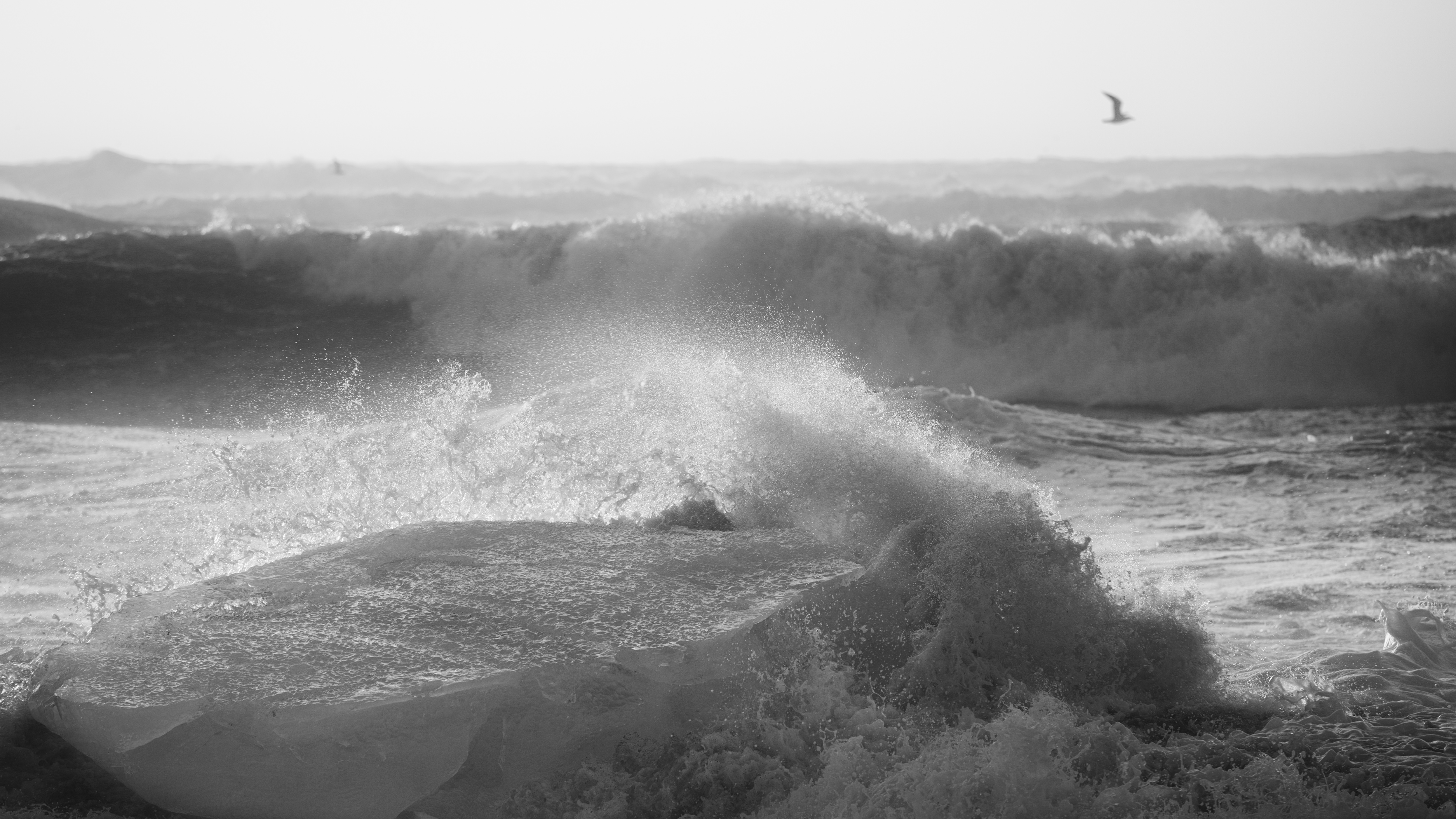
You are on a beach. Close your eyes and hear the deep, rhythmic sound of the ocean—the layered movement of water rising and falling. Rest here for a minute while it envelops you.
You are listening to what an older language would call the murmur of the billows.
I am the wind on the sea,
I am the wave of the ocean,
I am the murmur of the billows…
In early medieval mythology, the bard Amergin Glúingel arrived in Ireland with the Milesian invasion. When the druids of the Tuatha Dé Danann raised a storm to repel the invaders, Amergin answered with an invocation that calmed the sea and allowed them to land. The storm broke, not by force but by what was spoken.
Amergin did not claim Ireland by naming it. He claimed it by demonstrating he could speak from within it. He showed his fitness to belong through identification across domains: landscape, animal life, and weather. In his poem, he shifts perspective deliberately, reducing the sense of distance between self and environment. Instead of “this land is mine,” he says, “I can speak as this land because I am not separate from it.”
Druidry becomes real when it is expressed outwardly and physically, not just held mentally. Voice changes the quality of attention because speaking requires commitment. A thought can remain vague, but words spoken aloud have to take form. Speaking stabilizes attention; saying a line, a prayer, or a poem holds the mind in place longer than silent thinking. Voice externalizes intention. Once spoken, something exists outside of you; it is no longer just internal reflection.
Here is an English version of Amergin’s Song. Try it spoken aloud.
I am the wind on the sea,
I am the wave of the ocean,
I am the murmur of the billows,
I am the bull of seven battles,
I am the vulture on the rock,
I am a tear of the sun,
I am the fairest of plants,
I am a wild boar in valor,
I am a salmon in the water,
I am a lake in the plain,
I am a word of skill,
I am the point of the spear.
If you would like to hear Amergin’s Song in Old Irish sung to traditional music, here is a version by Iranian-born singer and composer Farya Faraji on YouTube. https://youtu.be/r63fRns0FSk
/|\ SeanR
 Awen's Light Grove
You must be logged in to post a comment.